


Author
Leon Ginsburg
Founder & CEO
A digital innovations leader, technologist, investor, and entrepreneur, Leon founded Sphere in 2005 to revolutionize the delivery of remote teams. He has a passion for people, products, processes, and technologies that not only perform well, but are also human-centric and meet the needs of the user.
17 posts by this author

How to Evaluate Company Brain Vendors: 12 Questions Every Enterprise Should Ask
Most vendors in this category can demo a chatbot. Few can prove retrieval quality on your corpus, permission handling at the chunk level, freshness against live source systems, and operational ownership after go-live — the 12-question scorecard Sphere uses.
Read the article
What an Enterprise Twin Is (and Why It Isn't an Org Chart)
An Enterprise Twin is a living, scored model of how your organization actually works — its systems, processes, and people — kept current from real change data. Unlike an org chart, it shows where work flows, where the single points of failure are, and where AI would actually pay off.
Read the article
The Real Cost of Ungoverned AI: Sprawl, Rework, and Risk
The token bill is the cost of ungoverned AI everyone sees. The larger costs — duplicated effort, rework from ungrounded answers, and the tail risk of a leak or a fine — are the ones that don't show up on an invoice until they're large.
Read the article
How to Build an Enterprise RAG Business Case: ROI Framework for AI Leaders
Enthusiasm doesn't move a budget — a numbers-driven case does. The hard and soft ROI levers, real benchmark numbers, payback expectations, and a one-page template you can take to the board.
Read the article
Microsoft Copilot vs. Custom Enterprise RAG: Which Is Right for Your Organization?
For a lot of Microsoft-centric organizations, buying Copilot is the right call. The framework for when multi-system data, governance, or vertical accuracy means you need a custom RAG build instead.
Read the article
Enterprise RAG Platforms Compared: Build vs. Buy vs. Partner (2026)
Build-or-buy is the wrong frame. A RAG system is a stack of layers — here is which ones you must own, which are commodities to configure, and which are worth partnering on.
Read the article
Sovereign AI for Regulated Industries: The Control-Plane Argument
For a regulated institution, renting AI as a black box you can't inspect, govern, or fully account for is a structural problem. Sovereign AI — owning the boundary the AI runs in — is the alternative, and it's an argument about control, not hosting.
Read the article
Drop a Spec, Ship a Feature: The Self-Building Admin Console
The slowest part of building a feature was never the coding — it was the tickets, handoffs, and translation. A self-build console collapses that: drop a spec, answer a few questions, and a working feature lands on staging the same day, with production behind a human signature.
Read the article
The Work That Assigns Itself: Coordination Without a Manager
Most systems that coordinate work assume something is in charge — a scheduler, a queue, a manager holding the master list. There's another way, borrowed from how a heat map works: let the work signal how much it needs doing, and let effort follow the heat.
Read the article
Why Enterprise AI Gets It Wrong, and What "Grounded" Fixes
Enterprise AI pilots fail less from bad models than from ungrounded ones — assistants answering from general knowledge instead of your facts, with no verification and no record. 'Grounded' is the fix, and it means four specific things.
Read the article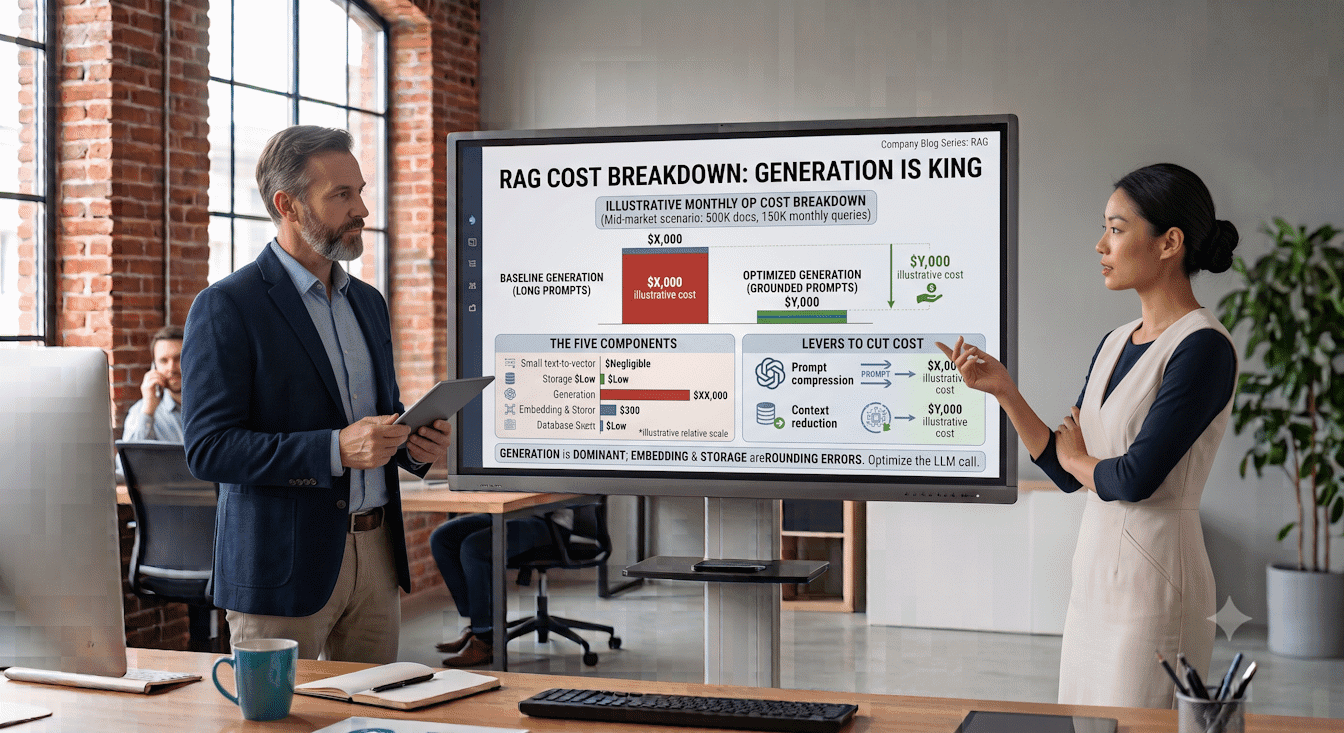
Enterprise RAG Cost: What It Actually Costs to Build and Operate at Scale
Ask a vendor what enterprise RAG costs and you'll get a shrug and a "it depends." It does — but the cost has a clear, predictable shape. Here's a transparent model: the five cost components, three architecture options, the cost per query, and five levers that cut spend without cutting quality — so you can model your own numbers and control them.
Read the article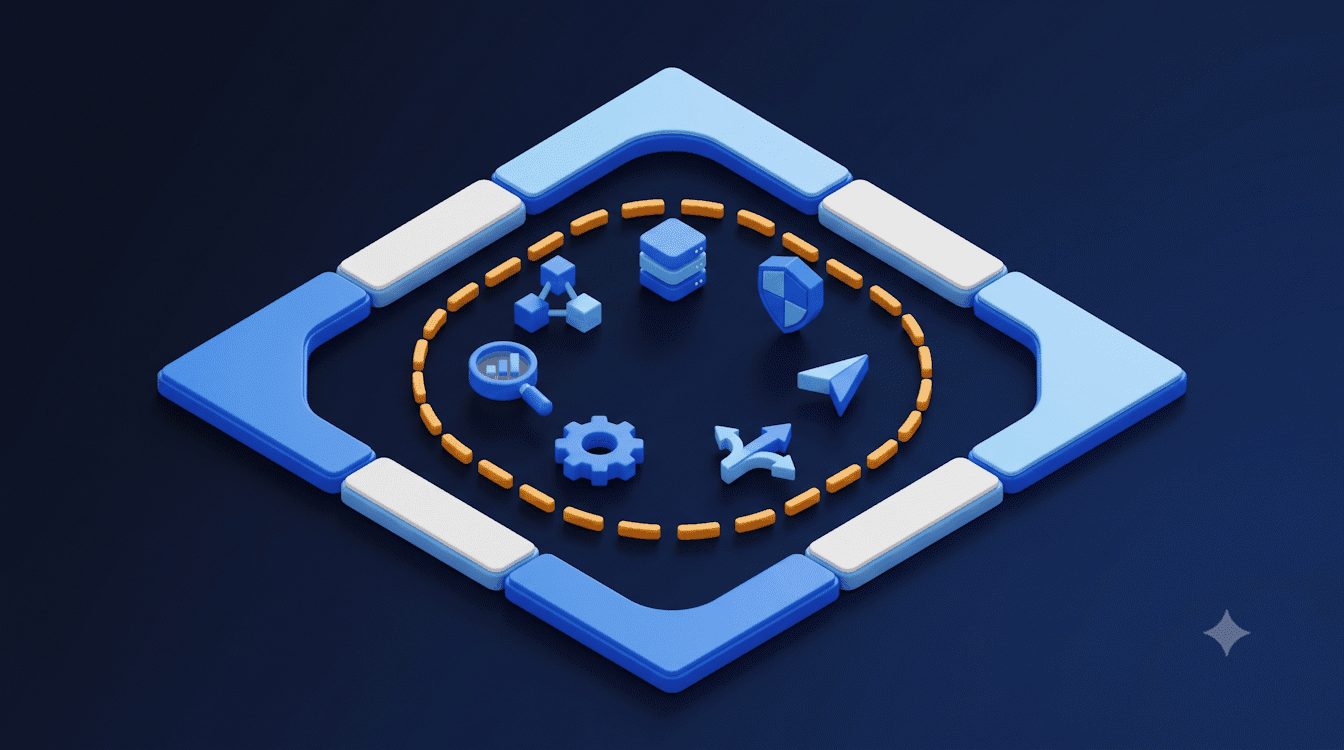
One Privacy Boundary, Six Capabilities: The Control-Plane Thesis
Most enterprises assemble AI from separate tools — a chat vendor, a vector database, a security add-on, a compliance spreadsheet. The control-plane thesis is that chat, memory, security, compliance, audit, and carbon accounting should share one privacy boundary and one record. When they don't, the gaps between them are where your risk lives.
Read the article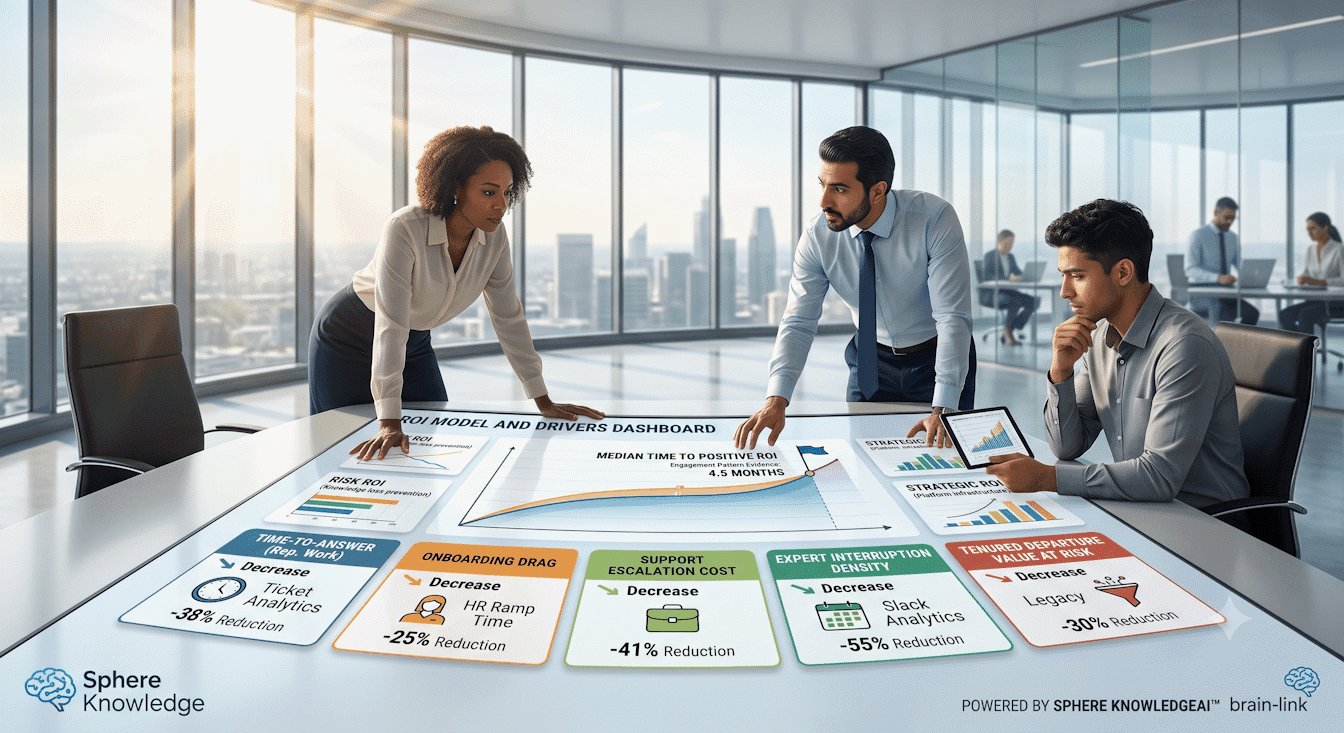
How to Measure Company Brain ROI: The Business Case for Institutional Memory AI
Most enterprise AI business cases get stuck justifying a soft productivity story. A Company Brain's payback runs through five measurable line items — time-to-answer, onboarding drag, escalation cost, expert interruption, and knowledge-departure risk — and Sphere's engagement pattern shows a median 4.5-month payback.
Read the article
Company Brain for M&A: Preserving Institutional Knowledge Through Acquisition
M&A due diligence covers technology, finance, security, and legal — and routinely misses how much of the acquired company's value is locked inside teams, tools, and informal processes. Here's the 45-day knowledge integration sprint that captures institutional knowledge before it walks out the door.
Read the article
The Hidden Cost of Institutional Memory Loss: What Happens When Your Best People Leave
Severance, recruiting, and ramp-time are the visible costs of a senior departure — and a fraction of the real number. Where the hidden costs sit, how to measure knowledge departure risk, and how AI captures institutional memory before it walks out.
Read the article
How to Evaluate AI Agents in 2026
What I've learned watching teams ship agents this year – and why most eval guides are quietly solving a 2023 problem.
Read the article
When to Replace Your SaaS Tools with Custom AI Software (And How to Know It's Time)
SaaS made sense a decade ago. For many businesses today, custom AI-powered software delivers better ROI, faster. Here’s how to know when to make the switch — without disrupting your operations.
Read the article